Savers in Ireland are being unfairly penalised by the current tax regime on life assurance investment and savings products, according to a new analysis by Royal London Ireland.
A comparison of a €10,000 investment over ten years shows that investors in life assurance bonds or saving products[1] would end up with €1,373 less than investors in direct shares, even when both grow at the same rate of 6% per year.
According to Royal London Ireland, the investment-gap is caused by four key factors:
- The 1% life assurance levy which immediately reduces the investment and the benefit of compound interest and returns.
- The 41% Exit Tax, compared with 33% Capital Gains Tax (CGT) on shares and bank deposits.
- The lack of access to the €1,270 annual CGT exemption.
- The deemed disposal rule, which taxes unrealised gains every eight years.
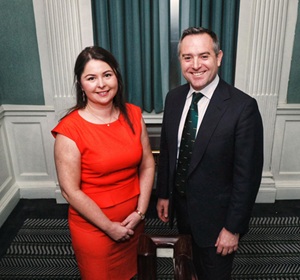
Noel Freeley, CEO of Royal London Ireland and current President of Insurance Ireland, spoke of the research findings:
“Savers in Ireland deserve a fair deal on tax. The tax applied to life assurance savings and investments products is considerably higher than what is applied to bank deposits and if investing directly in the stock market.
“Right now, if you put your money in a deposit account, the tax on any interest earned is 33% - yet the interest you earn is often tiny, with many deposit accounts paying well under 1% interest, which is below current inflation levels. The same 33% level of tax applies to gains from direct investment in the stock market or company shares.
“If, in a bid to get a better potential return on your savings, you put that same money into a life assurance investment or savings product, the tax is 41% and you also are hit with a 1% levy on your premiums, which eats considerably into your return. That is unfair and it means consumers who want to invest are doubly penalised - first by poor deposit rates, then by unfair tax treatment.”
Royal London Ireland experts have run calculations to show the real impact of the tax disparity which reveals that on a €10,000 investment, the difference is €1,373 over ten years.
Mr. Freeley continued,
“If we want to encourage people to save and invest wisely based on their attitude to risk, the Government needs to put everyone on an equal footing. Aligning tax on all savings products at 33% and removing the 1% levy would be a simple, fair change.
“Between 2017 and 2020, the Government cut the tax on bank deposits consistently by 2% each year so that the Deposit Interest Retention Tax ( DIRT) rate fell from 41% to 33%. Yet the same approach was not afforded to life assurance investment and savings products. Irish households have almost €167.1bn[2] sitting on deposit accounts, and most of this is earning little if any interest. Savers in Ireland deserve more than this. With Budget 2026 on the horizon, now is the time to make savings and investment products more attractive, more competitive and more accessible.
“Additionally, consumers would also very much benefit from the same kind of simple, tax-efficient options that are available in other countries, such as the UK’s Individual Savings Accounts (ISAs), as well as in other EU nations.”
Wider market context
Royal London Ireland says the inconsistency in the current tax treatment of savings has been consistently highlighted in recent years.
Mr. Freeley explained,
“DIRT on deposit interest and CGT on share gains both stand at 33%, yet the life assurance exit tax remains at 41% and has not been reduced since peaking in 2014.
“The additional 1% levy, introduced in 2009, further disadvantages consumers who choose life insurance-based products. It acts as a disincentive for small and medium-sized savers, many of whom invest as little as €100 per month. Contrary to the perception that these products are only for wealthy investors, the higher rate of tax disproportionately impacts households trying to build financial security for retirement, education or housing.
“Meanwhile, household deposits reached a record €167.1 billion in July 2025, much of it sitting in low-interest accounts. Reforming the tax regime could encourage savers to put more of this money into productive investments that could deliver better long-term returns while supporting housing, infrastructure and climate goals through investment in those areas through savings and investment funds.
“These positive potential changes were also highlighted in the Funds Sector Review recommendations undertaken on behalf of the Government in the period 2023-2024 – we believe it is now the time to begin implementing them, starting with the upcoming Budget.”
The case for reform
Royal London Ireland is calling for three clear measures in Budget 2026:
- Equalise tax treatment of all savings products to 33% tax levels.
- Abolish the 1% life assurance levy.
- Remove the eight-year deemed disposal requirement.
Mr. Freeley added,
“These reforms would give consumers fairer returns, more choice, and greater confidence to invest. They would also boost the Exchequer by unlocking household capital for long-term, productive use in the Irish economy.”