Eight in ten (81%) of workers eligible for Auto Enrolment (AE)[1] don’t think it, alone, will be enough to provide for their retirement. And of those, one in three (34%) believe their AE pension alone will be “nowhere near enough”.
This is according to the findings of a new survey of 1,000 adults nationwide by Ask Acorn, a nationwide network of financial intermediaries.
The survey examined how sufficient a retirement income those eligible for AE[2] expect the State-backed pension system to deliver. The AE system, MyFutureFund, commenced on January 1, 2026 and so far, 806,000 employees have been auto-enrolled[3].
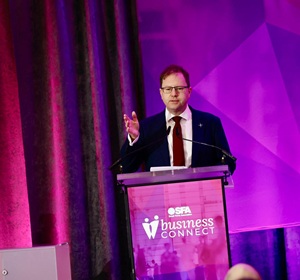
Commenting on the survey findings, Keith Butler, CEO of Ask Acorn said:
“While AE is one of the biggest reforms in Irish pensions in decades and has real potential to address this country’s pension coverage gap, there are limits on the contributions that can be made into AE – and in turn, the extent to which AE alone can be relied on to provide a sufficient income in retirement. This is borne out by the results of our survey, with the vast majority of those eligible for AE feeling that MyFutureFund alone would not be enough to provide for their retirement. This is encouraging as it shows that most Irish people understand the restrictions of AE and are under no illusion about the retirement income that the scheme can deliver.”
Headline findings from the Ask Acorn survey reveal that, of those eligible for AE:
- Only one in five (19%) think AE will deliver a sufficient income in retirement, with men more likely than women to hold this view (22% versus 16%).
- The older you are, the less inclined you are to think contributions to AE alone will be sufficient to provide for you in retirement. Those aged 55 plus are least inclined to believe contributions would be sufficient, with less than one in ten (9%) of this age group holding this view (see Table in Appendix).
- The youngest age group (18-24-year-olds) were the most inclined to believe that AE alone will provide a sufficient retirement income, at one in three (32%).
- Interestingly, at 25%, the second most likely age group to believe that AE would provide a sufficient retirement income are 35-44-year-olds.
- Almost half (47%) said that while AE will help, on its own, AE won’t be enough to provide for them in retirement. This is most strongly felt by those aged 25-34, where 55% of this age group expressed this view, followed by those aged 55 plus (49%).
- The most likely to believe that the retirement income provided by AE alone would be “nowhere near enough” include women and those over the age of 35. Almost four in ten (38%) women hold this strong view compared to around one in three (31%) men. And overall, four in ten of the over-35s feel the same.
Contribution limits
Under AE, both employee and employer contributions are set as a percentage of earnings, rising from 1.5% to 6% over the first ten years. Employee contributions are topped up by the State at a rate of €1 for every €3 you pay in (effectively a 25% top-up). AE does not allow flexibility in contribution rates so neither employees nor employers can contribute more or less than these set percentages. Furthermore, employer and State contributions are capped at €80,000 of annual salary.
Mr Butler added:
“If you want to save more than the AE contribution limits, you cannot do so within AE itself, but this doesn’t mean that AE won’t work for you or help boost your income in retirement. For many workers with no company pension on the table, AE can be a key part of their pension mix and something they can supplement with a personally-owned pension and the State pension, assuming the State pension will be still in operation when they retire[4].
If you’re one of the 806,000 workers signed up to AE so far, it’s important to carefully weigh up the scheme and decide if it’s going to form part of your long-term plans or not, or if you need to supplement AE with other pensions savings.
Where you stand on tax relief also needs to be borne in mind. If you are a higher rate taxpayer, you may benefit more from the tax relief available on private pensions such as Personal Retirement Savings Accounts (PRSA) or personal pensions, compared to the State top-up under AE. With a PRSA or personal pension, you receive tax relief at your marginal rate - currently 40% for higher rate taxpayers - on your contributions. This can make private pension options particularly attractive if you wish to contribute more than the fixed AE limits.
For some, AE will be a good fit. But for others, particularly those with different income levels, career paths or retirement goals, the contribution levels under AE may not fully meet their desired retirement income targets. It’s also important for auto-enrolled workers to understand that the type of pension delivered by AE will depend on how well the money is invested as the investment performance of contributions to MyFuture Fund will have a big bearing on how well AE will deliver for people come retirement.”
Ask Acorn is reminding auto-enrolled workers that they will soon be able to avail of the opt-out window, which is between six months and eight months of the date they were automatically enrolled, if they wish to leave AE. As there is a mandatory six-month participation period before workers can opt out of AE, for any worker enrolled on January 1, this means they could opt out of AE in the months of July and August.
However, Mr Butler warned,
“Any decision to opt out of should not be taken lightly, particularly if AE is a worker’s only opportunity to join a pension scheme. If you are considering opting out of AE, be sure to explore alternative pension options first – such as supplementing AE with a personally owned pension or signing up to a company pension scheme that became available after AE. It’s important that people seek independent advice before making any decision to stay in or to opt out. Many people arrived into AE without advice or guidance – so the upcoming opt-out window is a second chance to review their options. Everyone eligible should be looking closely at what the scheme offers and considering independent advice.”
[1] Employees aged between 23 and 60, earning over €20,000 per annum (across all employments) and not already contributing to an occupational pension are eligible for AE.
[2] 574 of the 1,000 survey respondents were eligible for AE.
[3] As per Dáil question, April 30, 2026
[4] The full State pension (Contributory) is currently (as at 2026) paid at a rate of €15,563.60 annually before any Christmas bonuses, living alone payments or household benefits package.