- New BPFI report sets out key recommendations to shape the European policy agenda during Ireland’s EU Presidency and strengthen Ireland’s influence and international profile
- Key proposals include driving forward the EU Savings and Investment Union and simplification of the regulatory framework
- As global trade becomes increasingly politicised, tackling EU’s declining economic competitiveness identified as crucial to realising political objectives
Monday 26th January 2026 - A new report published today by Banking & Payments Federation Ireland (BPFI) is urging government to drive progress on competitiveness, regulatory reform, and mobilising household savings, as it prepares to assume the Presidency of the Council of the European Union in July 2026. Setting out a number of recommendations, the paper stresses the opportunity that the Presidency offers Ireland as a strategic platform to shape the European policy agenda at a time of major geopolitical tensions and legislative activity, strengthening the country’s influence and international profile in financial services.
Key recommendations from the report include driving forward the EU’s Savings and Investment Union (SIU) and simplification of the regulatory framework so that the financial sector can act as a powerful catalyst for growth, innovation and resilience. Other recommendations include advancing discussions on an open and innovative digital infrastructure, effective housing delivery and the green transition, among other priorities. The report, which has been shared with the Department of Finance, comes as the government ramps up preparations for the commencement of the Presidency in July and follows the Department of Foreign Affairs consultation in December of last year on the development of Ireland’s Presidency priorities.
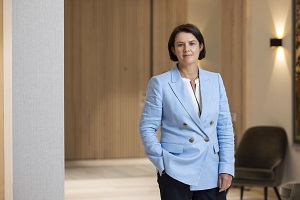
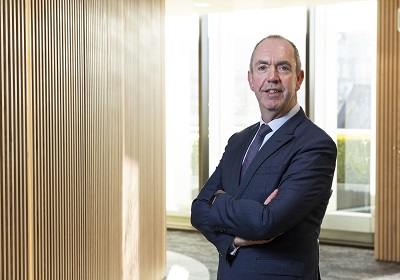
Speaking on the publication of today’s report Brian Hayes, Chief Executive, BPFI said: “Ireland will assume the EU Council Presidency at a time of both geopolitical turbulence and intense legislative activity in financial services. As global trade becomes increasingly politicised, tackling the EU’s declining economic competitiveness is crucial. As outlined by both Mario Draghi, and Enrico Letta, the EU must now harness the full power of the Single Market to drive growth, attract investment, and strengthen its role on the global stage.”
Focussing on Ireland’s role, Mr Hayes continued: “As a small, open economy Ireland can help drive this agenda forward while ensuring the EU remains outward-looking and an attractive destination for international business to locate. Ireland’s Presidency can help shape a pragmatic, competitive, and innovation-driven EU financial services framework, which in turn strengthens the EU’s economic position and competitive proposition. This, in particular, means driving forward the EU’s SIU, breaking down internal barriers within the single market and reinvigorating the securitisation market.”
In relation to capital markets, he added: “What is clear is that if the EU wants to fund its political objectives and diversify funding requirements, it needs to develop deeper and more liquid capital markets. However, for this to happen tough political decisions and bold choices will be required. Above all, compromise on the type and make-up of EU capital markets is needed. Ireland can play a vital role as a “bridge builder” in these discussions by leveraging its well-recognised expertise in financial services built up over many decades.”
Mr Hayes concluded: "Today's report underscores the necessity for a uniform application of the EU single rulebook and offers key, practical recommendations to achieve this goal. As the main sector funding the economy, we believe we have a unique vantage point from which to offer these recommendations. We look forward to continued dialogue and engagement with all relevant stakeholders in the months ahead.”
BPFI’s full report, Recommendations for Ireland’s EU Presidency 2026 – driving progress on competitiveness, regulatory reform and mobilising household savings' can be downloaded here