Financial support between family members remains a notable feature of household finances in Ireland, particularly among working-age adults, according to the latest research from Royal London Ireland. Around 15% of adults say they are currently receiving financial support from family, rising to almost one in four (24%) among those aged 34–44 (see Table 1 in Appendix). Women are slightly more likely than men to be in receipt of this support (17% vs 14%).
Another standout finding from the research is that 53% of those with adult children or grandchildren say they are providing financial assistance to them.
The findings are based on a survey by Royal London Ireland1, one of Ireland’s leading life insurance and pension companies. The new research highlights the scale and two-way nature of intergenerational financial reliance across Irish households. Those living in Dublin and other Leinster counties are the most likely to count on financial help from family (17% and 20% respectively) while Connacht residents (9%) are least likely to do so.
Among those receiving financial support, almost half (47%) say it is used to help cover day-to-day expenses such as groceries, utilities, childcare or insurance, while three in ten (30%) say it helps them to “keep their head above water.” Almost one in five (17%) say it has enabled them to save for a deposit for a home.
The Royal London Ireland survey examined exactly how those who rely on financial help use the money received.
Commenting on the findings, Mark Reilly, Pensions Proposition Lead, Royal London Ireland said:
“We can clearly see the importance of intergenerational financial support in helping households manage everyday financial pressures. For some, this support is not just occasional help but a key part of balancing day-to-day living costs, with a significant proportion relying on family assistance simply to stay on top of essential bills.
“At the same time, it is clear that this support can also play a more long-term role, helping some individuals build financial resilience - whether that is saving for a home deposit or managing unexpected expenses such as healthcare costs. While family support can provide a valuable safety net, it also shows the broader financial pressures many households are currently facing.”
According to the Royal London Ireland survey, uses of financial help received from a parent or grandparent include:
- covering the cost of regular expenditure, such as groceries, utilities, childcare or insurance (cited by 47% of those in receipt of financial support)
- keeping recipient’s head above water (30%)
- saving for the deposit for a home (17%)
- going on holiday (16%)
- affording medical costs (14%).
Mr Reilly went on to comment,
“It’s perhaps no surprise that 25–34 year olds are the most likely age group to use financial support towards a home deposit, with one in three (33%) saying this is the case. Those aged 35–44 follow closely behind, with almost three in ten (29%) using the money for this purpose.
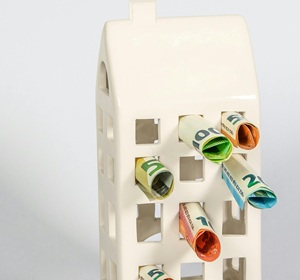
“It has become increasingly common in recent years for children to get financial assistance from their parents when buying a home2. This is largely due to the dramatic changes in Irish house prices in recent decades. In the 1990s, the average house price in Ireland was €88,6643 and by June 2023, this had climbed to €318,0004. And today, the national median house price is €399,0005, which is 27.5% higher than the peak of the Celtic Tiger years.
“Given the financial commitment involved in purchasing a home, it’s understandable that adult children may seek financial assistance for this, and that parents or grandparents may want to help here. It’s important though that the provision of such support doesn’t encourage adult children to depend on family too heavily financially when it comes to homeownership, or indeed the basic or other expenses which arise.”
The most financially dependent
The Royal London Ireland research threw some light on what impact age and other factors have on how people use the additional financial support.
Of those who receive financial support:
- Almost half (47%) of 18–24-year-olds use it to keep their head above water. And 45–54 year-olds in receipt of financial help came a close second (46%), despite this age cohort typically having established careers and having bought homes.
- More than two-thirds (67%) of 25-34 year olds, more than half (53%) of 18-24 year olds and almost half (48%) of 45-54 year olds count on that help to cover the cost of everyday essentials.
- Women are more likely than men to use financial help to keep their head above water: over a third (35%) of women in receipt of financial support used the money for this reason compared to less than a quarter (24%) of men.
- Those living in Dublin are the most likely to use financial help from family to keep their head above water – almost half (45%) of Dubliners in receipt of such support used it for this reason, perhaps a reflection of the higher living and housing costs in the capital. This compared to only one in five (21%) of Munster residents in receipt of support.
Mr Reilly added:
“Our research suggests that a significant proportion of Irish adults are not financially resilient, with many relying on family support to cover everyday costs and stay on top of essential bills. For society to progress, people need the ability to reach key milestones such as buying a first car or home, or building adequate retirement savings.
“That becomes much more difficult when day-to-day living depends on informal support from family. Life is unpredictable, and unexpected costs or setbacks can happen at any time. Having a solid financial foundation helps people not only manage those challenges but recover from them and move forward with greater confidence.
“Talking to a Financial Broker can help with building financial resilience and developing a financial plan tailored to an individual’s circumstances.”