
This is part 2 of a 2-part series. If you are looking for part 1 before you read this, see HERE
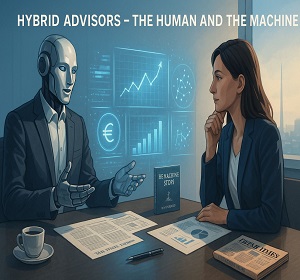
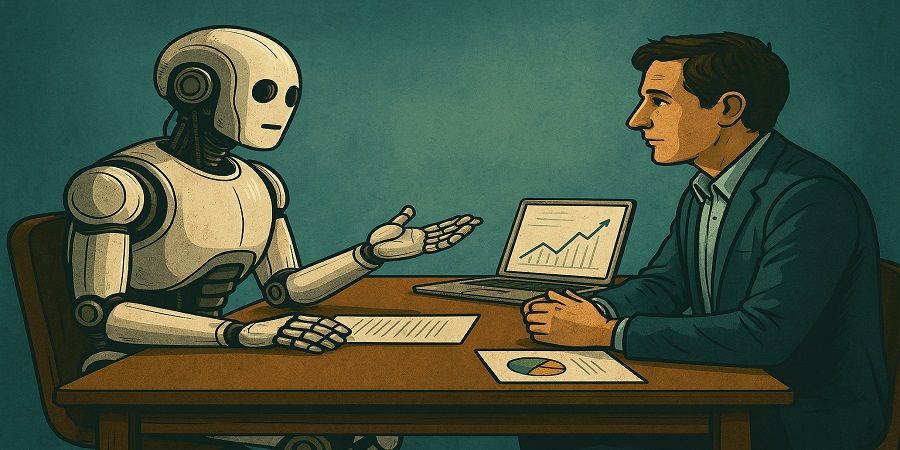
Yet, this story is not a simple morality tale of Robot Uprising vs. Humankind. In practice, the future of financial advice in Ireland and globally appears to be hybrid. The most forward-thinking players aren’t choosing between robo-advisors or human advisors, they are combining them. “The robots are coming, but humans are not going away just yet,” as one Irish Times columnist wryly concluded. In fact, the industry’s trajectory suggests that the optimal solution is not a cold turkey switch to automation, but a melding of algorithmic efficiency with human empathy.
Consider how even the early pioneers of robo-advice have adjusted course. Betterment, one of the largest US robo-advisor firms, made waves when it decided to hire human financial planners to offer optional advice on its platform, effectively acknowledging that purely automated guidance has limits. As financial analyst Josephine Maguire observed, it was perhaps inevitable that robo-advisors would “start to resemble traditional brokerages, with teams of advisers selling higher-margin services” for situations where a robot alone doesn’t suffice. In Ireland, the major institutions have baked this principle into their digital strategy. Bank of Ireland’s Life Advice service, for example, explicitly allows customers to seamlessly toggle between an online DIY journey and an advisor-assisted experience when they need it. “Consumers… want to complete simple transactions online… and to be supported, as appropriate, through technology or by advisers, depending on the complexity of their requirements,” explains BoI’s Seán Ó Murchú, emphasising that the platform provides an “appropriate combination of technology and support from advisors.” The message is clear: let the algorithms handle the straightforward stuff, rebalancing portfolios, diversifying assets, monitoring market moves, but keep humans on hand for the big decisions and the emotional moments.
Regulators, too, seem to favour a balanced approach. The Central Bank of Ireland has indicated it will likely supervise robo-advisory services under existing consumer protection codes, meaning the same expectations of fair, suitable advice will apply. This could nudge robo-advisors to maintain some form of human oversight or customer support to catch issues algorithms miss. Moreover, financial literacy initiatives are gaining importance. If the populace is to dance with the robots, they must learn the steps, understanding basic investing principles, the risks involved, and the fact that even a perfect algorithm cannot eliminate market uncertainty. As one financial planning report noted, the best use of robo-advice is in augmenting human decision-making, not replacing it: routine tasks and computations can be automated, freeing human advisers to focus on holistic “lifestyle financial planning” that a digital tool alone cannot handle. In that sense, the coming years might see the emergence of a new kind of advisor in Ireland’s financial landscape: part algorithm, part human counsellor, a cyborg if you will, combining machine precision with human judgment.
After all, money is deeply personal. It touches our families, our futures, our fears and aspirations. An app can generate an efficient portfolio in seconds, but it cannot yet look a couple in the eyes and help mediate their conflicting financial priorities, or reassure a worried pensioner with a lifetime of context and compassion. As Kuno, the rebellious son in Forster’s tale, discovered, there are aspects of life, the “homely comforts” of direct human experience and understanding, that machines, however powerful, cannot replicate.
Ireland’s challenge now is to embrace the benefits of robo-advisors without surrendering the human core of financial advice. The convenience is real: lower fees, broader access, and the democratisation of investing are achievements worth celebrating. The Machine has much to offer us in efficiency and data-driven insight. But there is a reason that, even in a digital age, trust is often described as a “human” quality. Trust in finance is earned through empathy, reputation, and accountability, qualities that lines of code alone do not inherently possess. As one wealth manager quipped, “people still want to talk to people”, even if they enjoy the convenience of an app. The likely path forward is one where the Machine advises in partnership with the human. The robo-advisor can handle the heavy lifting of calculations and market monitoring, while human advisors step in when judgment, creativity or reassurance are needed.
In Forster’s The Machine Stops, it was only when the Machine catastrophically failed that people remembered how to truly live and connect. We need not wait for any such calamity in our financial world. The key is to recognise the limits of convenience and the value of human insight before we’ve lost it. As Irish investors and institutions navigate this new era, striking that balance will be crucial. The robo-advisor future promises to be exciting and prosperous, if we can keep the “human” in the loop. In the end, the most successful financial systems will be those that use technology to serve people, not isolate or replace them. The Machine may advise; but it is humanity, in Ireland and beyond, that must decide just how much we should listen.
Sources: