Security gaps are putting Ireland’s national and economic success at risk, as our global economic profile makes us a high-value intelligence target, according to a new research paper published by the Institute of International and European Affairs (IIEA) and Deloitte Ireland.
The paper reveals that organisations in technology, financial services, aviation leasing and cybersecurity based in Ireland are now routinely encountering signs of foreign state-backed espionage.
President Volodymyr Zelenskyy’s recent visit to Ireland was accompanied by several unidentified drones that were not for civilian use entering a no-fly zone and an increase in suspicious shipping movements, which highlights Ireland’s exposure as we prepare for the upcoming presidency of the Council of the EU beginning mid-2026.
‘Secure Together: Enhancing Ireland’s Security and Resilience in a Time of Heightened Geopolitical Risk’ draws on interviews with senior officials and
roundtables with leaders across critical sectors. These leaders are concerned that public debates on defence and security in Ireland often collapse into neutrality versus NATO arguments. The more pressing need is for a national conversation focused on practical defence and national resilience.
Ireland sits on the edge of Europe, but we are at a focal point on its risk map. Ireland’s realm of defence include:
- Ireland hosts over 30% of EU data making it a prime target for hybrid activity.
- Three quarters of Northern Hemisphere subsea cables run through or near Irish waters, linking global financial markets and cloud services.
- Almost 90% of Irish companies have already suffered financial loss or operational disruption due to cyberattacks, with many now dealing with certain state-backed activity not just cybercrime.
While researching the paper, the authors heard how Irish private-sector leaders often play key roles in the provision of critical infrastructure and services, and as such they are keen to actively participate in a whole of society approach to national security and resilience. Key enablers to this will include ongoing and enhanced dialogue, information sharing and scenario planning.
Unlocking opportunities at a time of crisis
The EU’s Re-Arm Europe programme will unlock €800 billion in defence spending. This materially increased defence spend, and related EU initiatives, present a significant opportunity for Irish companies and SMEs to contribute capability and technologies, and leverage the economic benefit for Ireland.
Irish businesses working with dual-use technologies such as cybersecurity, robotics, AI, radar and satellites, and other technology organisations can not only access substantial financial support, but play a leading role in keeping Ireland and Europe safe.
The report also sets out practical targeted actions to ensure Ireland can both protect its economy and fully participate in Europe’s emerging security agenda.
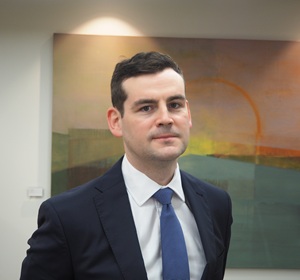
"Too often national conversations on defence and security in Ireland fall into silos, what we urgently need now is a practical conversation about how we can build national resilience," says Shane Mohan, partner and National Government & Public Services Leader in Deloitte Ireland.
"Ireland, as a small island nation in an important geographic location, is under threat in this hybrid warfare environment. National security and defence require a whole-of-government and a whole-of-society approach to build resilience. If we don’t do this, it threatens not just our national security, but it could damage our economic prosperity, as businesses may look towards European Member States that can provide a more secure environment to locate operations.
“IIEA and Deloitte’s paper identifies the risks and also the opportunities. With EU funding, such as EU’s ReArm Europe programme, unlocking opportunities for Irish SMEs and Ireland based organisations to develop the technology needed to defend Europe.”
Alex White, IIEA Director General said,
"A nation’s sense of security is foundational to its prosperity, social vibrancy and national harmony. The ongoing aggression by Russia against Ukraine, coupled with the growing prevalence of disinformation, sabotage, and cyberattacks, means Ireland’s security can no longer be regarded as assured. With this comes the need for informed and constructive dialogue on Ireland’s evolving security environment and the policy choices before us.
"The IIEA’s ongoing work with Deloitte Ireland has been extremely fruitful in this regard, and through rigorous research and engagement with leaders across business, government, and academia, we have sought to contribute meaningfully to a national conversation of critical importance."
"This white paper, ‘Secure Together: Enhancing Ireland’s Security and Resilience in a Time of Heightened Geopolitical Risk’ synthesises the perspectives of key stakeholders in Ireland’s national security and outlines how to strengthen Ireland’s position in a changing world. Inevitably there will be diverse opinion on how we best achieve this, but ensuring Ireland continues to be a place of peace, prosperity, and dignity is a responsibility we all share—and one that must remain at the forefront of our efforts."